

South west Scotland is one of those corners of Britain that people tend to underestimate. That tends to change the first time they drive along the Solway coast. It is quieter than the Highlands, more accessible for most of the UK’s population, and genuinely, spectacularly beautiful in a way that the brochures rarely capture.
If you are thinking about buying a static caravan or lodge in south west Scotland, the honest answer is that the region has a great deal to recommend it. But not every corner of it is the same, and not every park within it will suit what you are looking for. This guide will help you understand the key areas to consider, and what makes the Dumfries and Galloway stretch of the south west coast, and Coastal Kippford in particular, worth a very close look.
 Why south west Scotland?
When people think of Scotland, they tend to picture the Highlands or the west coast islands, and for good reason. But the south west of Scotland has its own quiet and consistent charm that appeals particularly to buyers who want to use their static caravan or lodge throughout the year, without the three-hour drive north.
Glasgow is roughly 90 minutes from the Dumfries and Galloway coast. Edinburgh is around two hours. The English border is under an hour for many buyers coming from the north of England. That accessibility matters when you want to use your holiday property for long weekends and mid-week breaks, not just two weeks in July.
The south west also benefits from a relatively mild climate. The Solway coast in particular is sheltered and temperate, which means the countryside holds its appeal across all four seasons in a way that higher, more exposed locations sometimes do not. Spring arrives early. Winters are quiet and often clear rather than bleak.

The main areas to consider
South west Scotland is a broad area. Here is a brief overview of the main regions that come up for buyers searching in this part of the country.
Ayrshire sits to the north, with famous golf courses along the coast and easy access from Glasgow. It is popular and well-served by infrastructure, but tends to attract larger, busier parks. If your priority is a quieter, more natural setting, you may find yourself looking further south.
The Isle of Arran is frequently described as Scotland in miniature, and rightly so. It is a beautiful island with a strong draw for walkers and wildlife enthusiasts. But as an island, it comes with practical considerations: ferry crossings in variable weather, limited supermarkets, and a degree of logistical planning that not every owner wants for a relaxed long weekend away.
Argyll and Bute offers dramatic Highland scenery, particularly around Loch Fyne and the Kintyre peninsula. Again, stunning, but more remote and more exposed, with longer travel times for most buyers.
Dumfries and Galloway sits in the south west corner of Scotland and is, for many buyers, the most practical and appealing combination of natural beauty, accessibility, and genuine peace. It is not dramatic in the Highland sense. It is quietly, deeply lovely, with coastline, ancient woodland, world-class cycling, and some of the darkest skies in Britain. And it is within two hours of Scotland’s two major cities.
Why Dumfries and Galloway specifically?
Dumfries and Galloway is one of Scotland’s most ecologically rich regions. The Solway Firth, the broad estuary that forms its southern boundary, is an internationally important site for wading birds and wildfowl. The area has several Dark Sky Parks and Reserves. Red squirrels are genuinely common rather than a rare sighting. The walking and cycling is of an exceptional standard, from the Kippford to Rockcliffe coastal path to the world-class Dalbeattie 7stanes mountain biking centre.
The region is also good value relative to equivalent coastal locations in other parts of Scotland. You are getting genuine natural beauty, good facilities in the local towns (Castle Douglas, Dumfries, Kirkcudbright), and a pace of life that many buyers find is exactly what they were looking for, without the premium price tag of the Argyll coast or the Highland interior.
For those considering a static caravan or lodge specifically, Dumfries and Galloway has a number of parks, and they vary significantly in character, setting, and the type of experience they offer. The Solway coast, and the area around Kippford and Rockcliffe in particular, represents one of the finest stretches of the region.
What to look for when choosing a park
When buyers are comparing parks in south west Scotland, there are a few things that tend to matter more than they initially expected.
- Open all year: If a park closes for four or five months of the year, you lose autumn (arguably the most beautiful season in this part of Scotland), winter (which is quiet and often spectacular), and early spring. Parks that operate 365 days a year, like Coastal Kippford, offer far greater flexibility and genuine value for money.
- Conservation and grounds: The setting of a park is its greatest asset, or its greatest weakness. A park that has held the David Bellamy Gold Conservation Award for 20 consecutive years is one that has demonstrably invested in its natural environment. That matters when you are paying pitch fees year after year.
- Family ownership: The difference between a family-run park and a corporate-managed site is something buyers often say they can feel immediately. The quality of the grounds, the responsiveness of the staff, the consistency of the maintenance. It is harder to quantify than star ratings but tends to show.
- Transparency on costs: Annual pitch fees, running costs, and what is and is not included in the purchase price are things you need to understand clearly before you commit to anything. Parks that are open about these from the outset, with no surprises, are the ones worth trusting.
 Coastal Kippford and why it stands out
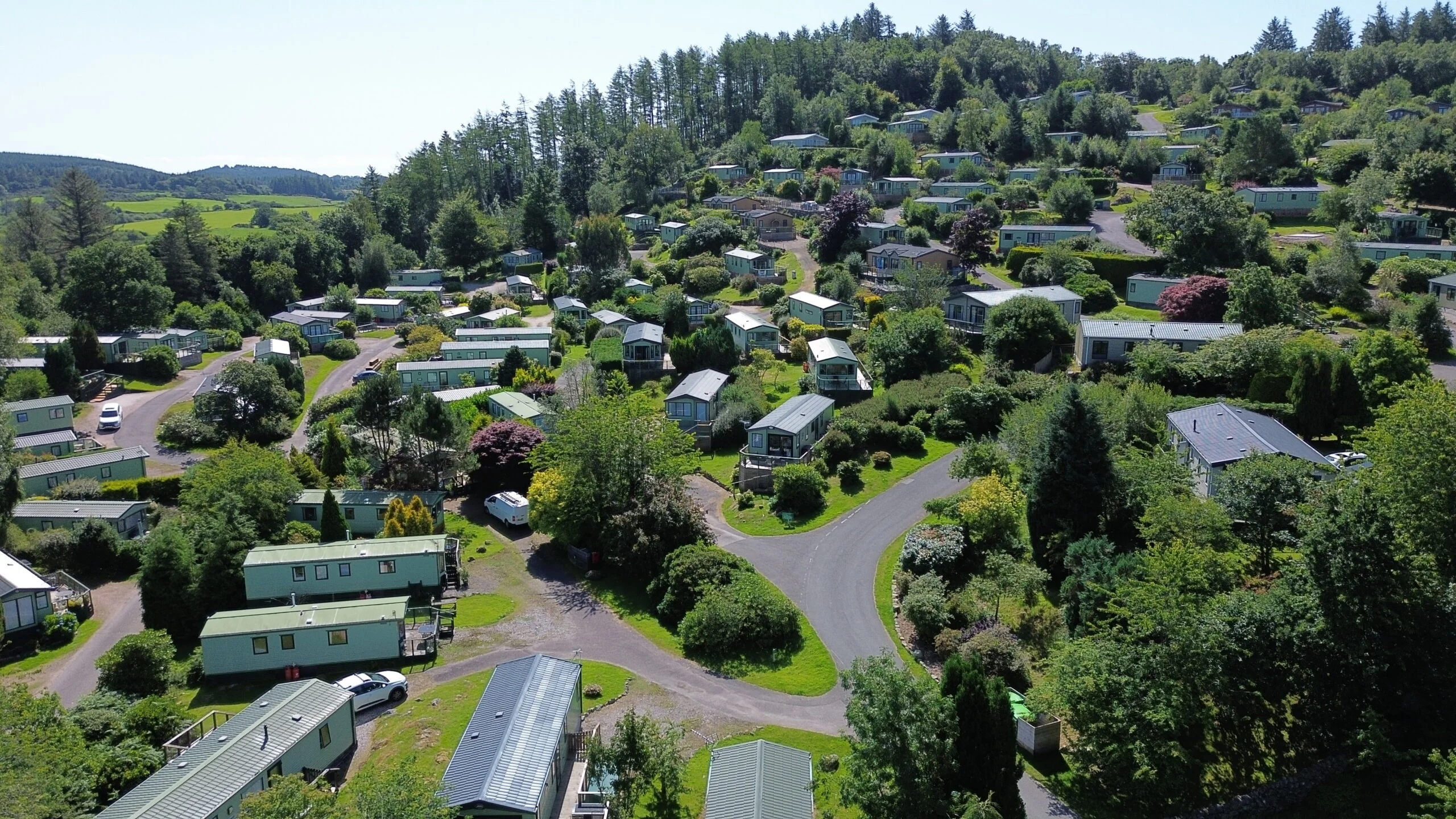
Coastal Kippford is a 4-star holiday park set on a hillside above the seaside village of Kippford, on the Solway Firth. It has been owned by the same family since the late 1960s, the Aston family, now managed by Melanie Riach, and it shows in every aspect of how the park is run and maintained.
It is open 365 days a year, staffed 24 hours a day, dog-friendly, and has held the David Bellamy Gold Conservation Award for 20 consecutive years. Red squirrels pass through the grounds. Dalbeattie Forest begins approximately 300 metres from the park entrance. The walk to Rockcliffe along the coast is one of the finest short coastal walks in Scotland.
If you are considering buying a holiday home in Dumfries and Galloway, Coastal Kippford offers lodges and static caravans at a range of price points, with siting, decking, and connection to mains services included in the purchase price.
The park has no booking windows for owners, no minimum stays, and no availability anxiety. You come when you want, stay as long as you like, and leave when you are ready. That simplicity is, in the end, what most buyers are looking for.
So, where is the best place to buy?
The honest answer is that it depends on your priorities. If you want dramatic Highland scenery and do not mind remoteness, Argyll has a great deal to offer. If you want island life and are prepared for the practicalities, Arran is remarkable. If you want something closer to the central belt and are more interested in a suburban feel, Ayrshire has its place.
But if what you want is a genuine natural setting, year-round access, coastal and forest walks from your door, a family-run park with 60 years of consistent care behind it, and an area that rewards every season differently, then Dumfries and Galloway, and Coastal Kippford specifically, is a very hard argument to counter.
The best first step is simply to come and see it. The park is open seven days a week, and viewings are available by arrangement.
-> Browse lodges for sale in Dumfries and Galloway
-> Browse static caravans for sale in Dumfries and Galloway